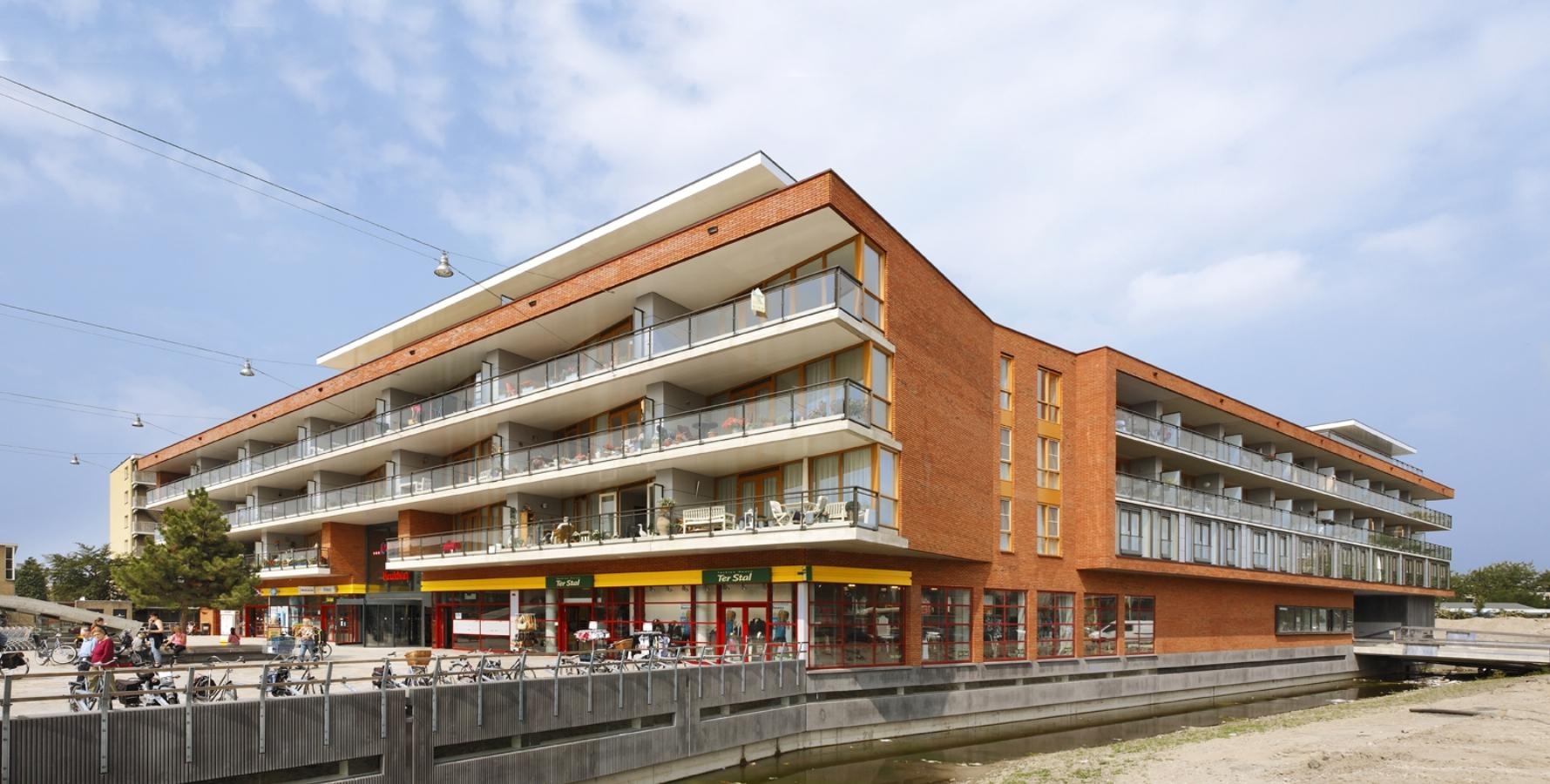
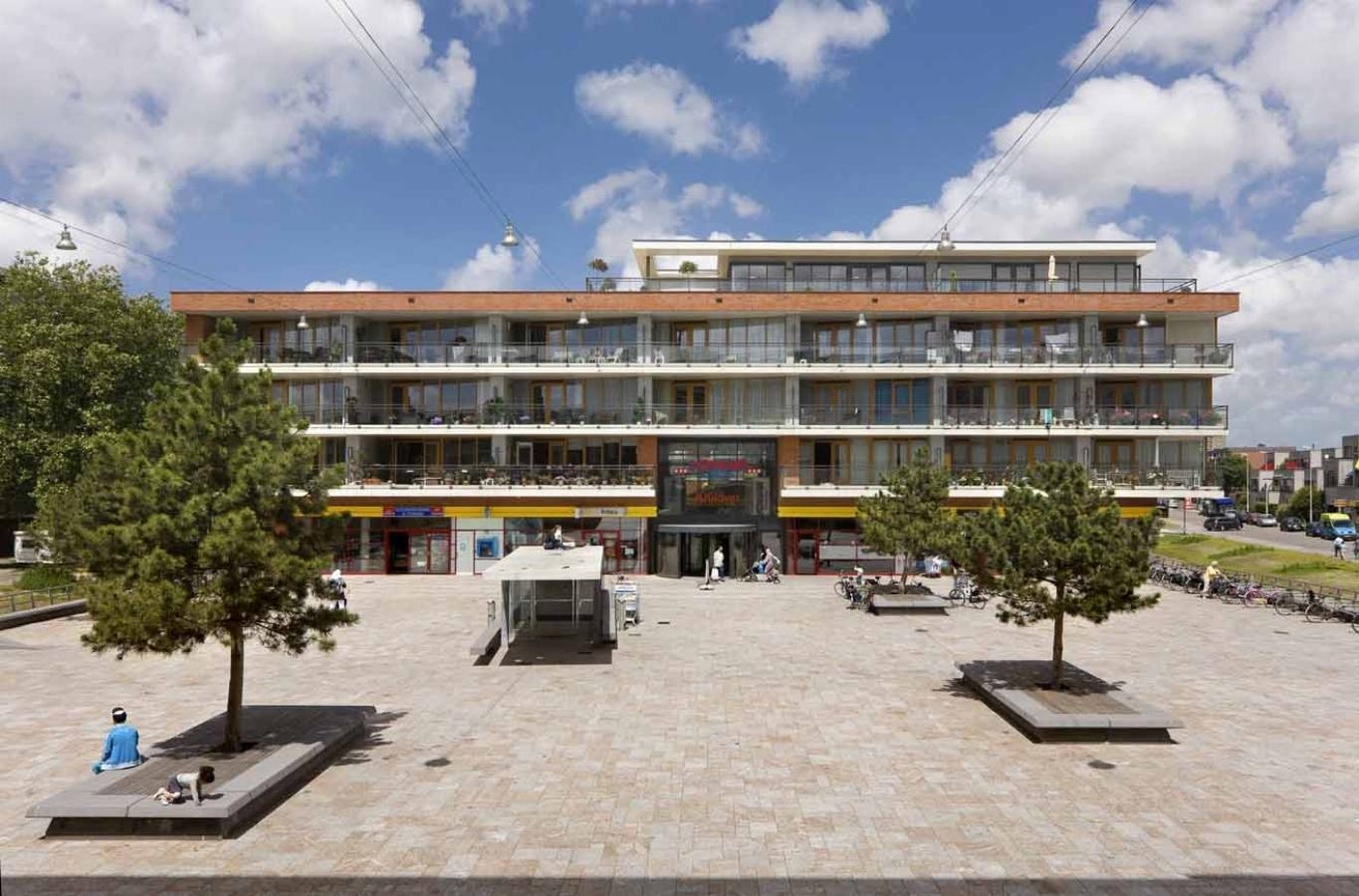
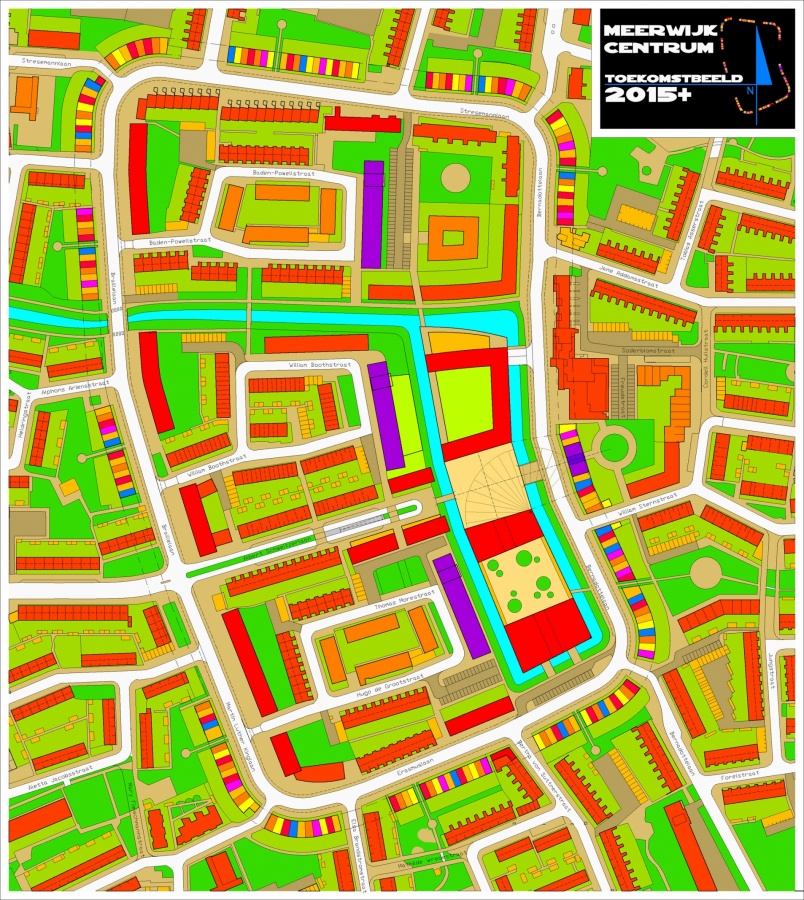
The “Meerwijk” district in Schalkwijk, built in the 1960s, has been built on the corner of Bernadottelaan and Albert Schweizerlaan. This center is part of the urban design that was made by our office in 2001. The building with retail spaces, including the Vomar supermarket, an underground parking garage with 215 places and 74 apartments, is one of the sub-plans of the community center. The whole has a modern, transparent and friendly character and adapts well to the neighborhood.
| Architects | Ronald Knappers |
| Client(s) | Hoorne b.v. |
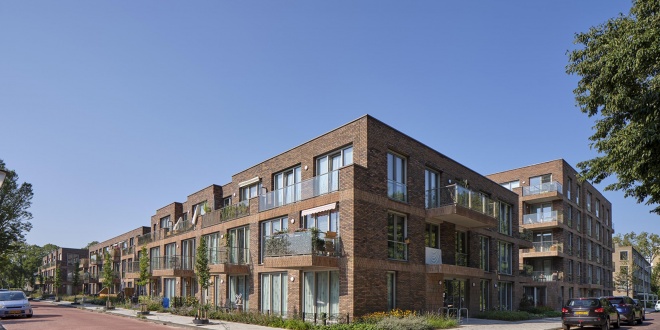
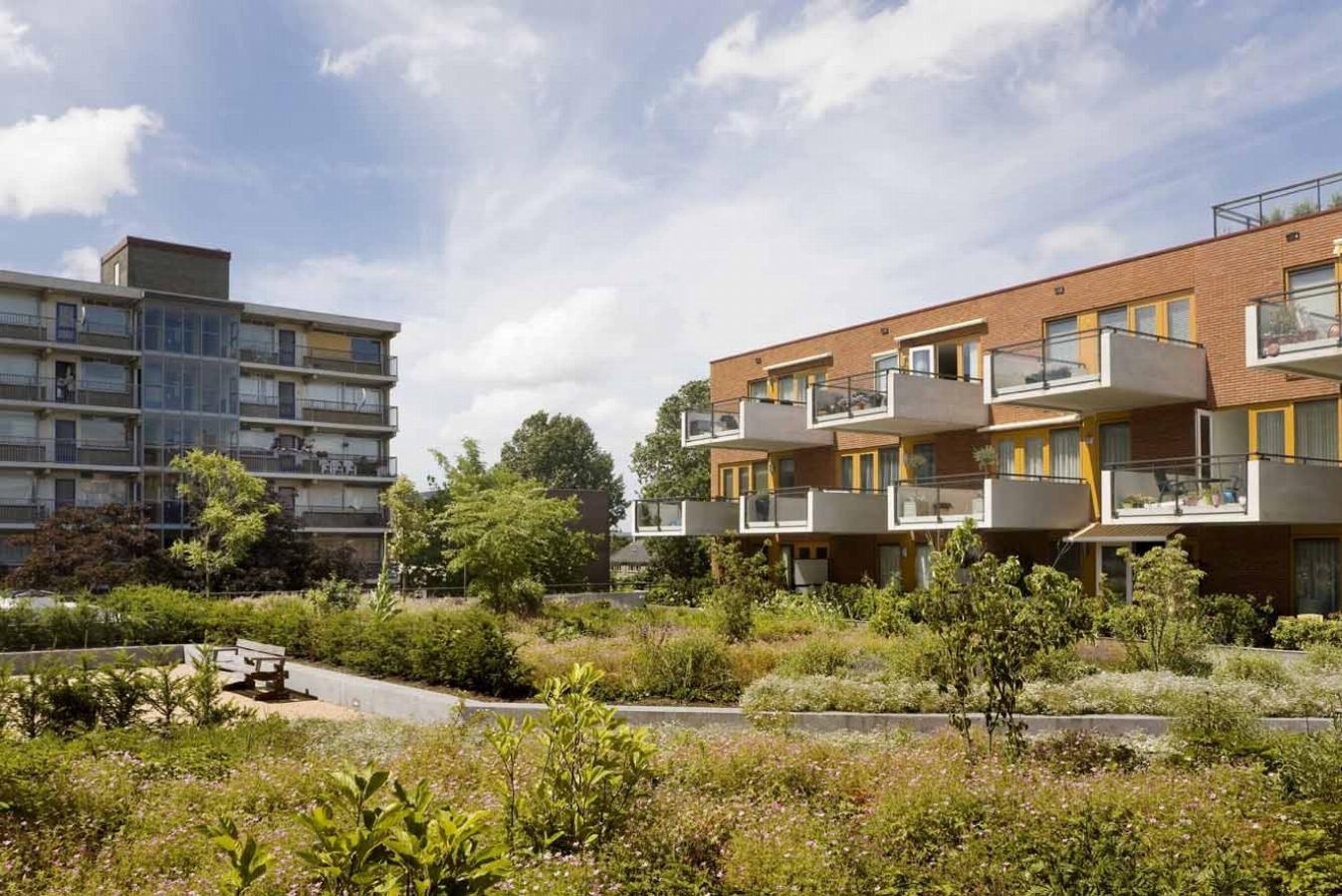
In Wassenaar, 40 duplex houses owned by the housing association St. Willibrordus have been replaced by 86 social rental dwellings, primarily intended for starters and seniors.
The site of the new social housing lies within a village extension from the 1960s. At the time, this was the northernmost district of Wassenaar — spaciously laid out, with views over meadows and farmhouses. In designing the plan for the replacement housing, we built upon the core qualities of the existing neighborhood: generous street profiles, front gardens, and abundant greenery.
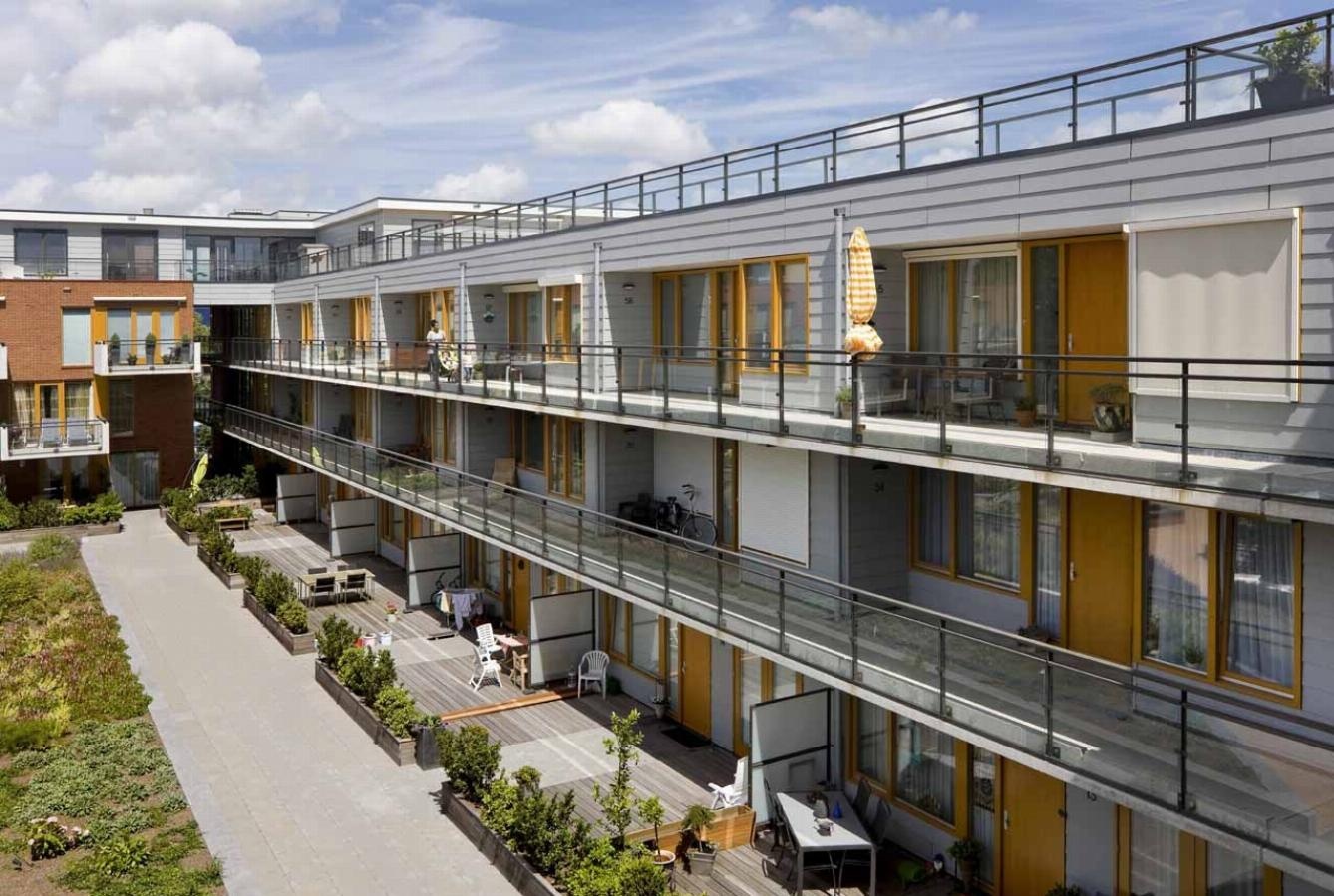
The new social housing is distributed across six buildings arranged around a shared courtyard garden. By removing the Stompwijckstraat that previously ran between the plots, space has been created to accommodate residents’ parking within the block, while also allowing room for the communal garden. Along this garden, a community facility has been incorporated.
The buildings feature a formal frontage with so-called ‘zoom dwellings’ on the ground floor — shallow homes with their entrance and a small front garden facing the street. The rear sides adjoin the parking area, which is located beneath an open, green deck. The existing tree structure of the area has been preserved. To ensure privacy for the front gardens, a green strip separates them from the sidewalk. The upper-level homes are accessed via wide external galleries.
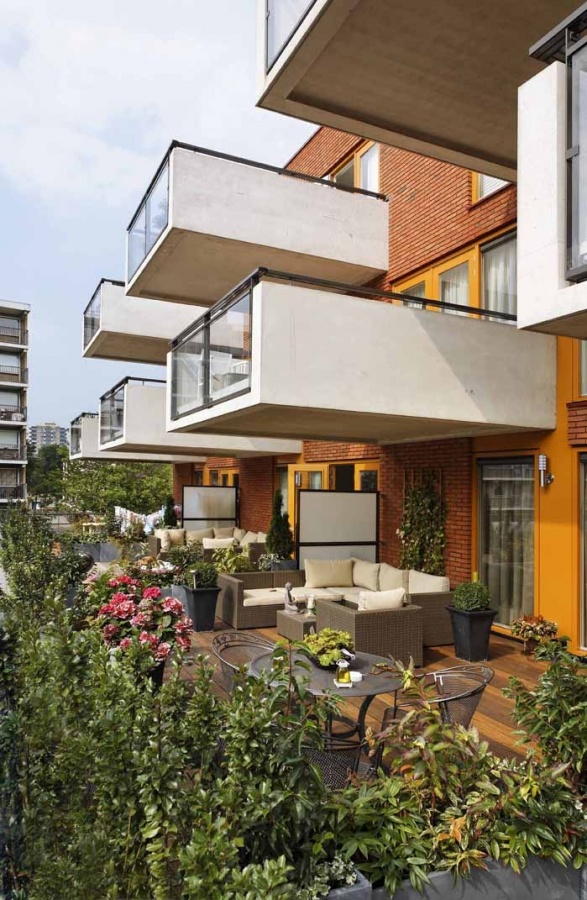
The urban design was created by Studio VVKH. To ensure the buildings align in scale with the surrounding structures along the long streets, the façade of the top (third) floor is set back slightly from the building line. The balconies create a connection with the street and are subtly angled to optimize orientation toward the sun. On the northern park side, the buildings are more robust in character, with their height responding to the adjacent apartment block.
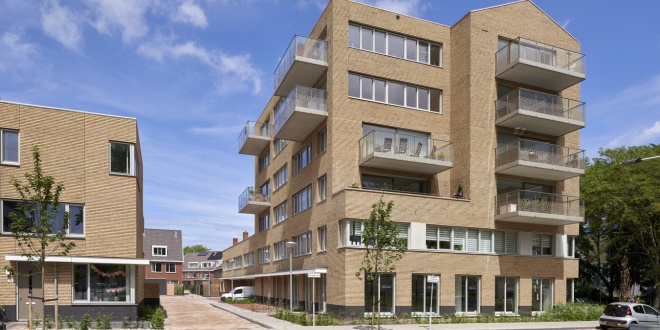
In cooperation with Smits bouwbedrijf, VVKH has won the european tender to develop a new housingarea in district Dieperhout in Leiden. The project consists of 48 dwellings, 12 apartments and a care facility of 1500m². Start of the constructionwork is planned in may 2015, because thats when a current school will move to a new building and the site will be available.
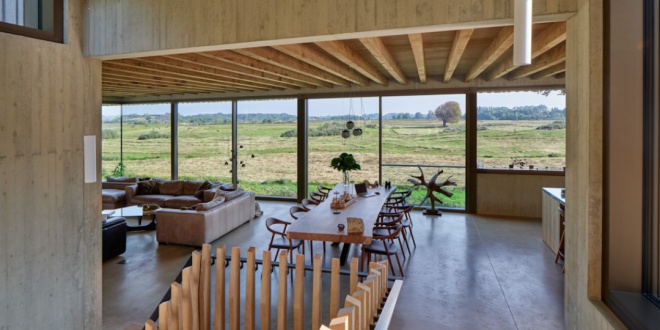
The “Villa van Bergenlaan” is located in Rijksdorp, Wassenaar, on the edge of a Natura 2000 protected area.
Situated along a dune ridge, it overlooks the Lentevreugd nature reserve. The villa is modest in expression, partially embedded into the dune, allowing it to become an integral part of the landscape. Energy for the house is generated from sun and air. Because the villa is partly underground, a hybrid structure of concrete and timber has been created.
The materials — including native oak, Fraké wood, concrete, and anodized aluminium — reveal their natural character; nothing is concealed, and in some cases the materials are given a special treatment, such as the wooden slat pattern cast into the concrete. The external façade, one to two storeys high, is clad in timber with concealed window frames.
Characteristic of the villa is the experience of light, space, materiality, and connection with the surrounding landscape. The villa is composed as a sequence of distinct spatial volumes — a modern interpretation of the “Raumplan” principle.
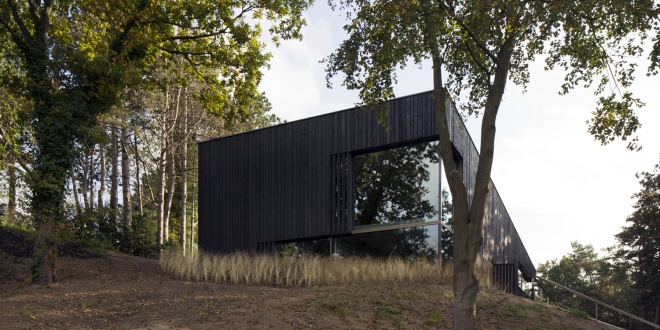
Villa Meijendel takes its name from the nature reserve in which it is located, where a forest meets a valley of dunes. The house is constructed from concrete and set into the side of a sandy slope. The building's design aims to create a dialogue with its surroundings, both through the way the form and materials engage with the landscape, and through the use of glass to provide views out from and into the house.
The boxy geometric structure is entirely clad in charred timber, creating a textured black surface that appears different depending on how sunlight falls on it. The exterior finish, inspired by the ancient Japanese shou sugi ban technique, also helps to preserve the wood. Sometimes the house is almost invisible against the dark edge of the forest, sometimes it sparkles in the sunlight because of the glittering charred wood, as such forming a background for the play of shadows of tree trunks and branches. The villa hides and reveals itself in the landscape.
The property has its entrance on a middle level accommodating an office and two bedrooms. Stairs ascend to an open-plan kitchen and living space, and drop down to a master bedroom and gym room.
The living room features a full-height corner window that looks out through the trees towards the dune valley. A lower window facing to the rear and a large glazed surface lining the adjacent double-height circulation area face out onto the forest. At the far end of the first floor, sliding glass doors lead out from the kitchen onto a terrace.
The material palette –concrete, steel and anodised aluminium– was chosen to complement the tones and textures of the surrounding environment. Each material is applied in a raw, untreated form. Internally, the walls are finished with smooth concrete, while the rough-sawn Douglas fir beams supporting the ceilings feature a distinctive grain.
West 8, Adriaan Geuze, is responsible for the garden design.
Photography is by Christian van der Kooy